
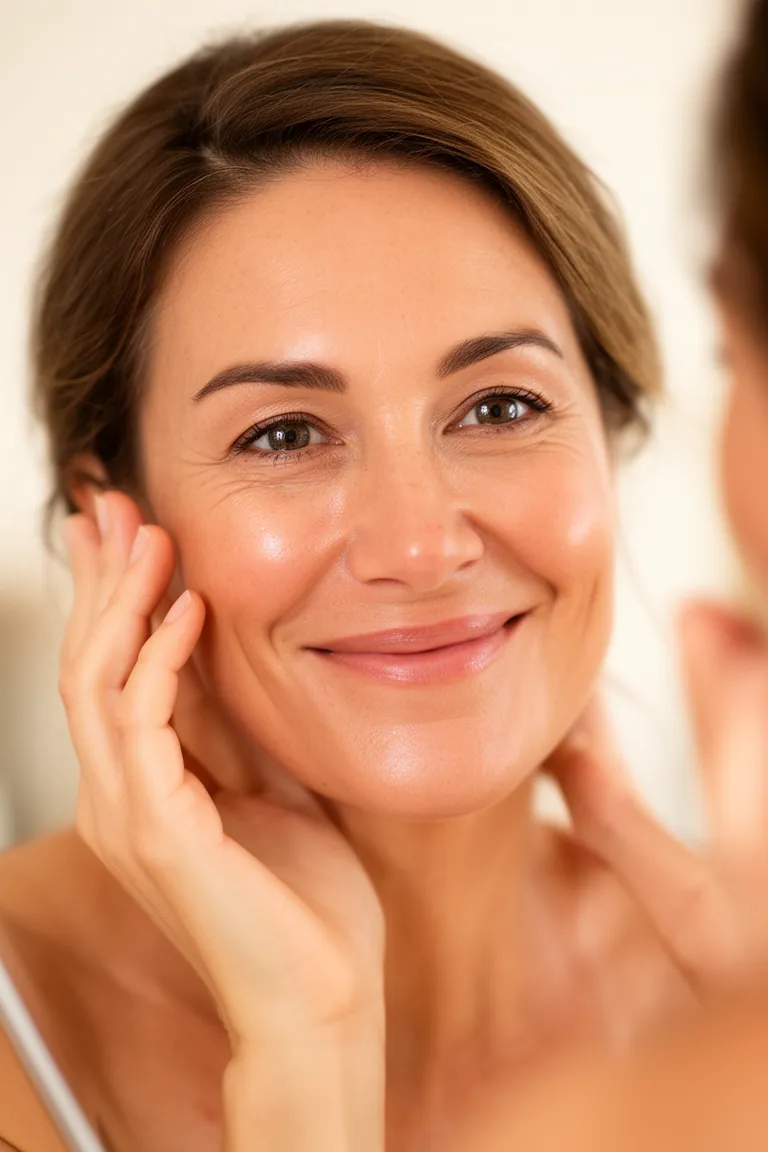
I stared at my reflection in the harsh morning light of my bathroom, my fingertip tracing the same faint, feathery lines that seemed to have taken up permanent residence under my eyes. My trusty water bottle, already half-empty, sat on the counter as a testament to my diligence. I’d done everything I was supposed to do. I chugged water like it was my job, slathered on sunscreen without fail, and followed a skincare routine with the devotion of a monk. Yet there they were, those fine lines around my eyes, looking a little more defined, a little more… permanent every single day.
For months, I’d poured money into the latest hydrating serums and eye creams, each promising to “plump” and “smooth.” I’d watch my skin drink them up, see a temporary, dewy softness, and feel a flicker of hope. But by the next morning, after a full night of supposedly restorative sleep and another liter of water, the lines would be back, holding their ground. The frustration was a quiet, persistent hum. Was I just genetically doomed to have crinkly eyes? Or was I fundamentally misunderstanding something? I felt like I was following a rulebook that had missing pages, spending money on a promise that seemed to evaporate as quickly as the moisture from my skin. That morning, the disconnect between my effort and my reflection finally snapped something in me. It wasn’t just vanity; it was the principle of the thing. If I was going to invest time, money, and hope into this, I needed to know the truth. Was hydration the magic eraser I’d been led to believe, or was I just temporarily glossing over a problem that needed a completely different solution?
The Morning I Realized My Water Habit Wasn’t Erasing My Eye Lines
The turning point wasn't in a dermatologist's office or after reading a scientific study. It was on a Tuesday, after a particularly good, hydrated week. My skin felt supple, my energy was up, and I’d been religious with my hyaluronic acid serum. I leaned into the mirror, expecting to see improvement, and instead met the same faint network of lines. That’s when it hit me: I was treating all lines as a singular problem—a lack of water. But what if some lines were one thing and other lines were something else entirely? The sheer unfairness of doing everything "right" and not getting the "right" results was the fuel I needed to dig deeper. It was the core of my frustration: I drink plenty of water but still have fine lines around my eyes, and no one was explaining why.
I discovered that visible lines can persist despite adequate fluid intake because hydration, while crucial for overall skin health, is only one player on a very crowded field. The delicate skin around our eyes is under constant assault from facial movement (every smile, squint, and expression), the natural decline of collagen and elastin that comes with time, genetics, and, most significantly, cumulative sun exposure. You can be perfectly hydrated and still have lines formed from a lifetime of laughter and sunny days. This was my first clue that I was asking my water bottle to do a job it was never designed for. I had to stop thinking of my face as a houseplant that just needed more watering. It was more like a historical document, and some of the writing was etched in deeper than others.
What Hydration Can Actually Do for Fine Lines Around the Eyes
So, if drinking water doesn’t erase lines, what’s the point? This was my biggest "aha" moment. Hydration’s role isn’t to remove; it’s to optimize. Think of a raisin versus a grape. A raisin is a dehydrated grape—shrunken, wrinkled, and creased. Plump that raisin back up with water, and the creases become softer, less pronounced, but the blueprint for those creases is still there. That’s exactly what happens with your skin.
Topical humectants like hyaluronic acid and glycerin work by drawing water into the very top layers of your skin, creating a temporary plumping effect. This can make dehydrated lines—those caused by a lack of water in the skin—look dramatically softer, even invisible, for several hours. This is the "instant gratification" we see with good moisturizers. However, it cannot rebuild collagen, erase deep-set creases from repetitive motions, or reverse photodamage. Understanding this helped me see that hydration makes my under-eye lines look better but does not remove them permanently. It’s a cosmetic improvement, not a structural repair.
The Timeline of Hope vs. Reality
The immediate plump is what sells products. You put it on, you see a difference. But in my experience using hydration for fine lines around the eyes, I learned to separate that morning glow from lasting change. That dewy look might last 6-8 hours. Real, sustained improvement in your skin’s hydration level and barrier strength—meaning your skin is better at holding onto water day after day—takes a minimum of 2 to 4 weeks of unwavering consistency. And even then, you’re improving the quality of your skin canvas, not erasing the deeper sketches on it.
Why Drinking More Water and Applying Eye Cream Are Not the Same Thing
I used to think if I drank enough water, my skin would simply reflect that inner glow from the inside out. While systemic hydration is vital for organ function and overall skin health, it doesn’t directly pipe moisture to your epidermis. The outermost layer of your skin, the stratum corneum, gets its hydration largely from the external environment and what you apply topically. This is where the concept of the skin barrier comes in.
Drinking water supports your body’s overall health, which includes skin health. But applying a moisturizer is like sealing the deal. A good eye cream or facial moisturizer does two things: it delivers humectants to attract water, and it provides emollients and occlusives to fortify the skin barrier and prevent that precious water from evaporating. So, my journey taught me they are complementary, not interchangeable, strategies. One supports the foundation; the other does the direct surface work. This is why does drinking water reduce fine lines around eyes is a trick question—it supports the process, but it’s not the sole mechanic.
The Signs My Lines Were Dehydration Lines Versus Established Wrinkles
This distinction became my most powerful tool, saving me from endless product disappointment. I learned to play detective with my own face. Dehydration lines are fickle, temporary, and situational. They are often finer, more superficial, and can look worse in dry weather, after a long flight, or a night of poor sleep. The key test? They improve significantly within 15-30 minutes of applying a rich moisturizer. If your lines seem to "melt away" after your skincare routine only to creep back later, you’re likely seeing the effects of transient dehydration. Can dehydration make eye wrinkles look worse? Absolutely. It makes everything look more etched and shadowed.
Established wrinkles, on the other hand, are more stubborn. They are visible at rest (not just when you smile or squint), follow the patterns of your facial expressions, and don’t disappear with moisturizer alone. They are part of your skin’s architecture. I realized my own under-eye area had a mix: some lines would plump up nicely with my hyaluronic acid, while a few finer ones at the corners remained as constant guests. This was the honest answer to does hydration really help get rid of fine lines around eyes or am I wasting money? For some lines, it’s a fantastic, temporary help. For others, it’s merely a supportive friend, not a cure.
| My Line Type | Key Signs | How Hydration Helps | Realistic Outcome |
|---|---|---|---|
| Dehydration Lines | Look worse in dry weather, fade after moisturizer, finer texture | Temporarily plumps to near-invisibility; improves with consistent barrier care | Great short-term improvement; long-term management is possible |
| Expression Lines (e.g., crow's feet) | Visible when smiling/squinting, follow muscle patterns | Can soften appearance but won't erase; needs muscle-relaxing or collagen-building strategies | Moderate visual softening; prevention is key |
| Static Wrinkles | Visible at rest, deeper, present for years | Minimal visual change; may look slightly "filled" but structure remains | Hydration supports skin health but does not reverse; professional treatments may be needed for significant change |
What I Stopped Doing Immediately (The Money-Saver Realizations)
My research led me to some hard stops that saved my wallet and my sanity. First, I stopped overloading the delicate eye area with multiple heavy products in a desperate attempt to "fix" it. More isn’t always better and can lead to milia (those tiny, stubborn white bumps). I also stopped expecting any product, no matter how expensive, to perform miracles overnight. I stopped blaming myself for "not drinking enough" when those deeper lines persisted. This mental shift was as important as any product change.
Most importantly, I stopped confusing temporary plumping with long-term results. Just because my skin looked bouncier at 10 AM didn’t mean I was reversing time. I began to view hydrating products for what they are: essential maintenance that keeps my skin healthy, resilient, and looking its current best, not a time machine. I questioned every purchase: was I buying hope in a jar, or a tool with a clear, honest job?
Scientific Evidence
What I Changed Before Spending Another Dollar
Armed with this new understanding, I overhauled my approach without immediately buying more stuff. I started by using my existing gentle facial moisturizer around my eyes instead of feeling pressured to buy a separate "eye cream" unless it contained an active ingredient I wanted specifically for that area. I became fanatical about my daily broad-spectrum sunscreen, the single most proven anti-aging product in existence, applying it religiously to my entire eye area and the tops of my cheeks. I tried firming skin treatments for women over 40 and saw no results.
I introduced a simple, fragrance-free hydrating serum with ceramides to support my barrier. I started tracking my skin’s response over a month with weekly photos in consistent morning light, not daily mirror inspections that fueled anxiety. This helped me see the real, gradual benefits of consistency—like my skin looking more even and less parched—rather than the daily illusion of change. I focused on gentle application, using my ring finger to pat in products instead of tugging. This period was about auditing, not accumulating.
The Non-Hydrating Heroes I Finally Embraced
This journey forced me to look beyond the hydration-only narrative. If I wanted to address the structural aspects of those lines, I needed to incorporate ingredients that actually communicate with my skin cells to support collagen. After consulting with a dermatologist, I slowly introduced a low-concentration retinol product formulated for the eye area, using it only two nights a week to build tolerance. I looked for products with peptides, which can help support skin firmness. collagen boosting skincare products.
These are not "hydrators" in the traditional sense. They don’t provide that instant dewy plump. Their work is silent and long-term, happening over weeks and months. This was the final piece of the puzzle: pairing immediate hydrating effects (for the "raisin" lines) with long-term structural support (for the "blueprint" lines). It answered my question about does hyaluronic acid help fine lines around eyes or is it temporary—it’s a brilliant temporary plumper and hydrator, but it needs these other actors for the long game. how to reduce wrinkles naturally. For a deeper understanding of how ingredients like collagen peptides work, consider exploring Effects of hydrolyzed collagen supplementation on skin aging: a systematic review....
Finding Value Instead of Chasing Miracles
Today, I still drink my water. I still love my hydrating serums. But the frustration is gone, replaced by a sense of informed stewardship over my skin. I no longer feel like I’m wasting money on hydrating eye cream for fine lines because I now know exactly what I’m paying for: temporary improvement in skin texture, enhanced resilience, and a healthy barrier. I don’t expect it to erase decades of life and laughter.
I see my routine as a two-part strategy: daily hydration and protection (sunscreen, moisturizer) to prevent dehydration and shield from future damage, and targeted, gradual intervention (like retinoids) to gently improve what’s already there. It’s a balanced, sustainable, and much more peaceful way to approach skincare. The lines haven’t vanished, but my anxiety about them has. And that feels like the real victory.
Frequently Asked Questions

Q: How long does it take for hydration to improve fine lines around the eyes? A: The immediate plumping effect from topical humectants like hyaluronic acid can be seen within minutes and lasts for several hours. However, consistent, long-term improvement in skin hydration and barrier function—which can make dehydration lines less prominent overall—takes about 2 to 4 weeks of dedicated routine. Remember, this improves skin quality and the look of dryness, not deep wrinkles.
Q: Does drinking water reduce fine lines around eyes directly? A: Not directly, no. Drinking adequate water is essential for your overall health, which includes supporting your skin's natural functions. However, it hydrates your body systemically and doesn't target moisture to your facial skin. Topical moisturizers are necessary to directly hydrate and seal the outermost layer of your skin where fine lines from dehydration appear.
Q: I’ve tried hydrating eye cream but my under-eye wrinkles are still there. What am I doing wrong? A: You’re likely not doing anything wrong—this was my exact experience. If you have established wrinkles (visible at rest), a hydrating cream can only soften their appearance, not remove them. It’s like using a great primer on a textured wall; it looks smoother, but the texture is still there. Consider if your routine includes ingredients that support collagen (like retinoids or peptides) alongside hydration, and manage your expectations. Hydration is necessary, but often not sufficient, for those deeper lines.
Q: What should I actually look for in an eye product if hydration isn’t enough? A: Look for a multi-tasking formula. You still need the hydrating base: humectants like hyaluronic acid or glycerin. Then, look for barrier-supporting ingredients like ceramides or fatty acids. Finally, for addressing the look of lines more directly, seek out gentle versions of proven actives like peptides, low-concentration retinol, or niacinamide. Always choose fragrance-free to minimize irritation in this delicate area.
Q: Why do my under-eye lines look so much worse some mornings, even though I drink water? A: This is the classic sign of transient dehydration! Overnight, moisture evaporates from your skin (this is called transepidermal water loss). Even if you’re well-hydrated internally, your skin’s barrier might not be holding onto that water effectively at the surface. Factors like dry bedroom air, heating/cooling, or a slightly compromised skin barrier can make lines look more pronounced upon waking. A good moisturizer the night before and a humidifier can help immensely.
Q: When should I consider seeing a professional about under-eye lines? A: If you’ve established a consistent, thoughtful routine for 3-6 months—including sunscreen, hydration, and perhaps a gentle active—and you’re still feeling frustrated by the appearance of static lines, it’s a perfect time to see a dermatologist. They can assess your skin type, the specific nature of your lines, and discuss a wider range of options, from prescription topicals to in-office procedures, all tailored to your goals and budget.
📌 Love this guide? Save it on Pinterest!
Pin Fine Lines Around Eyes? Why Water Isn't Enough (2026 Guide) to your board so you can come back to it later.

