
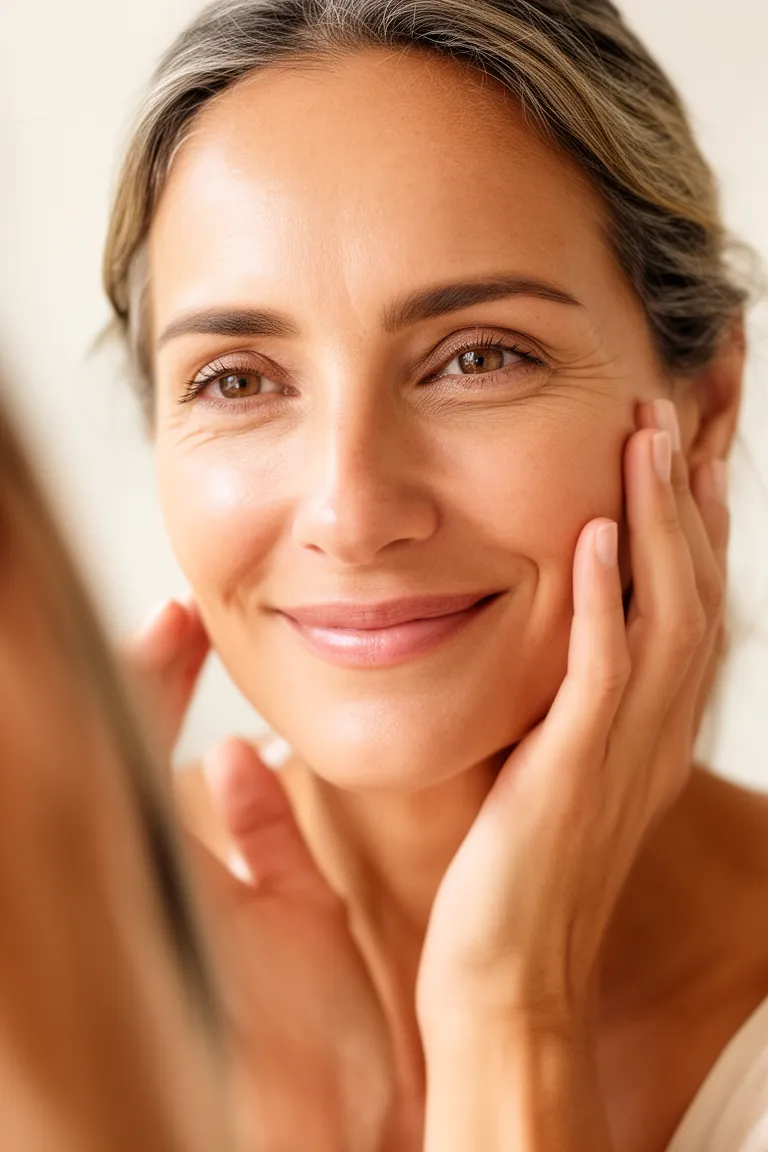
I was putting on a turtleneck, a soft cashmere one I’ve always loved, when I saw it. As I pulled the fabric over my chin, the skin on my neck didn’t snap back into place like it used to. It just… lingered for a second, like a slow sigh. I froze. I’m the woman who has religiously applied SPF 50 since my late twenties. I eat my leafy greens, drink water like it’s my job, and have a skincare routine that would impress a beauty editor. I did everything the magazines told me to. So why, at 47, did my skin feel like it was quietly deflating, losing the very bounce that made it feel like mine?
That moment was a quiet betrayal. It wasn’t about vanity, not really. It was the unsettling feeling that my body was changing on a schedule I hadn’t agreed to, despite my best efforts. I felt a wave of frustration, followed by a deep, nagging question: If the foundational rules of “good skincare” weren’t enough to restore skin elasticity after 40, what on earth was I supposed to do next?
I spent months and a small fortune on expensive potions promising “instant lifting” and “dramatic firming.” The results were so subtle they felt like a trick of the light. It was only when I stepped back from the marketing hype and started listening to what my skin was actually telling me—and what the science behind aging skin really said—that I finally found a path forward. This isn’t a story about a miracle cure. It’s about understanding why our skin changes and building a resilient, realistic routine that actually works with our biology, not against it.
The Morning I Realized My Skin Had Lost Its Bounce
It wasn’t just the turtleneck incident. It was a series of small, personal betrayals. My foundation would settle into lines on my cheeks that I swore weren’t there the month before. The skin on the back of my hands started to look thin, almost crepey. Most tellingly, when I pinched the skin on my cheek, it didn’t spring back with that resilient, youthful snap. It felt softer, looser. I had confused hydration with elasticity for years. My skin could be perfectly moisturized and still lack that underlying architectural firmness. I learned to distinguish the issues: dryness is a surface texture, fine lines are etchings, but true laxity is a structural shift. My skin’s scaffolding was changing, and no amount of surface-level dewiness could prop it back up. This was the beginning of my journey to improve crepey skin and elasticity after 40, but first, I had to admit that what I was seeing wasn’t just dryness—it was a deeper architectural change.
Why My Healthy Lifestyle Wasn’t Enough to Restore Skin Elasticity After 40
This was the hardest pill to swallow. I felt like I’d followed the manual! But here’s what I discovered: after 40, it’s a different game with different rules. My healthy habits were absolutely crucial—they were preventing further damage and supporting overall health—but they couldn’t single-handedly reverse a fundamental biological process. Starting in our mid-20s, we lose about 1% of our collagen per year. By 40, that decline can accelerate, thanks in part to perimenopause and shifting hormones like estrogen, which directly supports collagen production. My years of sunscreen were heroic, but they were mitigating future sun damage, not rebuilding the collagen and elastin fibers that had already been subtly degraded by a lifetime of cumulative UV exposure (yes, even from those teenage beach days). My skin’s moisture barrier also becomes more fragile with age, making it harder to retain hydration, which can make skin look and feel less plump, exacerbating the appearance of laxity. I wasn’t doing anything wrong. My body was just following its natural timeline. This was the core of my frustration: skin elasticity after 40 even though I wear sunscreen is still a challenge because sunscreen is a shield, not a rebuild tool. It protects the future you, but it doesn’t retroactively repair the past.
The Firming Creams I Tried—and What They Couldn’t Do
Armed with frustration and a credit card, I embarked on the “Firming Cream Tour.” I tried jars that cost more than my electric bill, serums with exotic ingredients, and gadgets that promised to “micro-current” my skin back to life. Some of them were lovely. They hydrated beautifully, temporarily plumped my skin with hyaluronic acid, and left a nice, smooth finish. But the actual lifting effect on my sagging skin after 40 was negligible. I felt like I was putting the most expensive, luxurious wallpaper over a wall that needed new studs. The creams couldn’t penetrate deeply enough to rebuild collagen or restructure elastin. They worked on the very top layers, improving texture and hydration, which is valuable, but it’s not the same as restoring foundational elasticity. I was treating a symptom, not the cause. My experience taught me that I tried firming creams but my skin is still sagging after 40 because those creams are often designed for cosmetic, temporary effects, not for the deep dermal remodeling that true elasticity requires.
It's easy to feel discouraged when your usual efforts don't yield the desired results.
The Turning Point: Shifting from "Firming" to "Rebuilding"
My "aha" moment came not in a beauty aisle, but in a moment of exhaustion. I was staring at my reflection, tired of the cycle of hope and disappointment, when I realized I was using the wrong vocabulary. I stopped searching for "firming" and started researching "collagen support" and "barrier repair." I realized I needed to think like a builder. First, I had to repair the site (my skin barrier) so it could hold onto moisture and nutrients and create a stable environment for repair. Then, I had to encourage the body to bring in new building materials (stimulate collagen). This shifted my entire approach from seeking an instant, cosmetic fix to adopting a long-term, biological strategy. I began to see my skin as a living organ that needed support, not a piece of fabric that needed ironing. This crucial insight—that restoring skin elasticity after 40 is an inside-out process of support and stimulation—was what I found missing in most articles. They sold the dream of quick fixes but skipped the honest conversation about how skin actually regenerates at a cellular level.
Understanding Your Skin's New Needs After 40
Before I could build a new routine, I had to understand what was actually happening beneath the surface. I pictured my skin’s dermis like a mattress. In my 30s, it was a firm, springy mattress with tight, coiled springs (collagen) and bouncy foam (elastin). After 40, some of those springs were starting to sag and the foam was losing its bounce. No amount of fluffing the mattress pad (moisturizing) was going to fix the internal structure. I needed tools that could signal my body to make new springs and repair the foam. This is where active ingredients come in, but they can’t work effectively if the mattress cover (my skin barrier) is ripped or threadbare. That’s why the order of operations became so critical: repair the barrier first, then introduce the rebuilding signals. This framework changed everything for me and answered my core question: why isn't my skincare routine improving skin elasticity after 40? It was because my routine was out of order and missing key players aimed at the dermal layer.
Scientific Evidence
The Routine That Finally Made My Skin Look More Resilient
I stripped my routine back to basics with a new, strategic focus. My goal was resilience, not just a temporary glow. Here’s the real-life, step-by-step approach I built—the one that finally gave my skin back its sense of substance.
Gentle Cleansing & Barrier First: I swapped all foaming cleansers for creamy, non-stripping ones. Every morning and night, I start with this non-negotiable step to protect my fragile moisture barrier. A compromised barrier means inflammation, dehydration, and skin that’s too busy putting out fires to focus on collagen production. This is the essential foundation for everything else.
Hydration as Infrastructure: Before any active ingredients, I layer a simple hyaluronic acid serum on damp skin. This isn’t for elasticity per se, but a well-hydrated, plump canvas makes everything look and function better. It’s the necessary groundwork that reduces the appearance of crepiness and allows other products to work more effectively.
The Retinoid Commitment: This was the game-changer. I introduced a retinol serum slowly, starting with just one night a week for two weeks, then two nights a week, gradually building tolerance. Yes, it came with a period of dryness and flaking—the “retinization” process. I powered through with extra barrier cream on those nights. Retinoids are one of the few proven topical ingredients that can signal your skin cells to produce new collagen. It’s not fast, and it’s not a miracle, but it’s foundational. I learned does retinol help restore skin elasticity after 40 is a resounding yes, but it’s a marathon, not a sprint. You must be patient and consistent.
Antioxidant Armor & SPF (My Non-Negotiables): In the morning, after my hydrating serum, I use a vitamin C serum. It helps defend against the free radicals that break down collagen all day long. Then, my lifelong friend, broad-spectrum SPF 50. This routine isn’t about one superstar product; it’s about the consistent, daily symphony of barrier support, collagen-focused ingredients, and protection. This is what I now consider the best routine for restoring skin elasticity after 40—simple, strategic, and sustainable.
Navigating the Options: A Realistic Pathway Guide
As I researched, I realized there wasn't one single right answer, but different pathways suited to different levels of concern, commitment, and budget. To help clarify my own thinking, and maybe yours, I broke it down like this:
| Approach | Best For | Realistic Timeline for Visible Change | Key Consideration |
|---|---|---|---|
| Barrier-Focused Basics | Starting fresh, sensitive skin, or repairing a damaged barrier. | 4–6 weeks for improved comfort and hydration. | This is the essential foundation. Improves texture but won't significantly lift sagging. |
| Topical Actives (Retinoids + Antioxidants) | Those committed to a consistent, long-term home routine for collagen support. | 3–6 months for early firmness; 9–12 months for more noticeable resilience. | Patience is non-negotiable. Requires diligent sun protection. |
| Combined Topical & Oral Support | Individuals wanting a 360-degree approach, focusing on skin health from inside and out. | Oral supplements like peptides may support nails/hair in weeks; skin synergy takes 4+ months. | Manage expectations: oral collagen's effect on facial elasticity is subtle and varies. |
| Professional In-Office Treatments | Addressing persistent laxity that topical care cannot reach. | Varies by treatment; multiple sessions often needed, with results developing over months. | Involves higher cost and downtime. A complement to, not a replacement for, good daily care. |
The Ingredients That Moved the Needle (And One That Didn’t)
Beyond retinoids, I learned to become a savvy ingredient decoder. Peptides in my moisturizers became a trusted ally—these little chains of amino acids act like messengers, telling my skin to get to work supporting its own structural proteins. Niacinamide became another hero, not for elasticity directly, but for its incredible ability to strengthen my barrier, calm redness, and improve overall texture, creating the perfect environment for my retinoid to do its job.
As for oral collagen supplements? I tried them diligently for over six months. My nails got stronger and grew faster, and my joints felt a bit better, which was a nice bonus. But for my facial skin’s elasticity? The change was so subtle it was indistinguishable from the effects of my topical routine. I couldn’t justify the ongoing expense for a "maybe." For me, the topical routine and later professional treatments delivered far more noticeable, direct results. This is a key part of my experience restoring skin elasticity after 40—it taught me to invest in what has the most direct, evidence-based path to my skin cells, and to be skeptical of trends that promise systemic beauty fixes from a pill.
How Long It Took—and When I Considered Professional Treatment
This is where you need radical honesty, the kind I desperately wanted to find online. My skin felt more comfortable, less tight, and more hydrated within weeks of fixing my barrier. A bit of that temporary plumpness from good hydration returned, which already made a difference in how my makeup sat and how my skin felt to the touch. But the real, tangible changes in firmness and resilience—the kind where I didn’t have to squint in the mirror to see it—those took a solid 4–6 months of unwavering retinoid use. Even then, the improvement was a gradual restoration of what was lost, not a reversal to my 30s.
Around the one-year mark of my new routine, I had a moment of clarity. While my skin looked healthier, smoother, and more radiant—and I was proud of that—there was still a distinct, gentle heaviness along my jawline that topical skincare couldn’t address. That persistent laxity is often due to deeper structural changes—the natural loss of youthful fat pads, the weakening of the tiny ligaments that anchor skin to muscle. No cream, no matter how expensive, can lift that. So, I finally booked a consultation with a board-certified dermatologist. It wasn't a failure; it was the next logical step in my care. We discussed options like radiofrequency microneedling and laser treatments, which create controlled, deeper injury to truly remodel collagen in the lower dermis. Knowing when to seek professional help was just as important as building my home routine. It was empowering, not a surrender.
Letting Go of Perfect and Embracing Resilient
My journey to restore skin elasticity after 40 taught me more about patience and self-compassion than about biochemistry. I had to let go of chasing the ghost of my 30s skin. That version of me didn’t have this laugh line, or that story told in a faint sun spot. Instead, I now work for skin that looks healthy, strong, and cared-for. It has its lines and its history, but it also has a newfound bounce that comes from being deeply supported. The best routine for restoring skin elasticity after 40 isn’t the most complicated or expensive one—it’s the consistent, intelligent one you can stick with, that respects your skin’s biology and your own peace of mind. It’s about moving from frustration to understanding, and from understanding to empowered action.
Frequently Asked Questions

Q: How long does it take to actually improve skin elasticity after 40 with a new routine? A: Manage your expectations from the start. You may see improved hydration, less tightness, and a smoother texture within 2-4 weeks of focusing on barrier repair. However, meaningful changes in firmness and bounce from collagen-supporting ingredients like retinoids typically take a minimum of 3-6 months of unwavering, consistent use. True skin remodeling is a slow, cellular process—think of it as growing a new garden, not rearranging furniture.
Q: I use a rich moisturizer every day. Isn’t that enough for firming? A: This was my biggest misconception, and it’s a common one. A great moisturizer is essential for barrier health and preventing dryness, which can make skin look crepey and accentuate laxity. But moisturizers primarily work on the skin’s outermost layers. Can moisturizer restore skin elasticity after 40 on its own? Generally, no. True elasticity comes from the deeper dermis, supported by collagen and elastin fibers. To significantly impact those, you need ingredients that can communicate with those deeper layers, like retinoids, or treatments that can physically reach them.
Q: What’s the most common mistake people make when trying to fix sagging skin after 40? A: Besides expecting overnight results, it’s using harsh, stripping products that wreck the moisture barrier in pursuit of “deep cleaning” or immediate exfoliation. When your barrier is compromised, your skin is in a state of inflammation and stress. It’s too busy repairing daily damage to focus on long-term projects like collagen production. Always prioritize gentle cleansing and barrier repair first—it makes every other active ingredient you use more effective and comfortable.
Q: When should someone consider professional treatments instead of just topical skincare? A: If you’ve been consistently using a well-formulated routine with proven actives (like retinoids) for over a year and are still dissatisfied with the level of laxity or sagging—especially along the jawline, neck, or around the eyes—it’s a good time to consult a professional. Topicals are phenomenal for texture, tone, and overall skin health, but they have physical limits in re-draping significantly loose skin or rebuilding deep structural loss. A dermatologist can assess your skin’s anatomy and discuss if you’re a candidate for treatments that target deeper tissue.
Q: What should I look for in products aimed at restoring elasticity? A: Focus on the ingredient list, not the marketing claims on the front of the bottle. Look for proven collagen-supporting agents like retinol (or prescription retinoids like tretinoin), peptides (look for names like palmitoyl tripeptide, etc.), and vitamin C (as L-ascorbic acid or other stable forms). For the critical foundation of barrier support, seek out ceramides, fatty acids, cholesterol, and niacinamide. Choose a simple routine with these key players from reputable brands rather than amassing a cupboard full of trendy, single-use products that may conflict with each other.
📌 Love this guide? Save it on Pinterest!
Pin Restore Skin Elasticity After 40: What Actually Works in 2026 to your board so you can come back to it later.

