

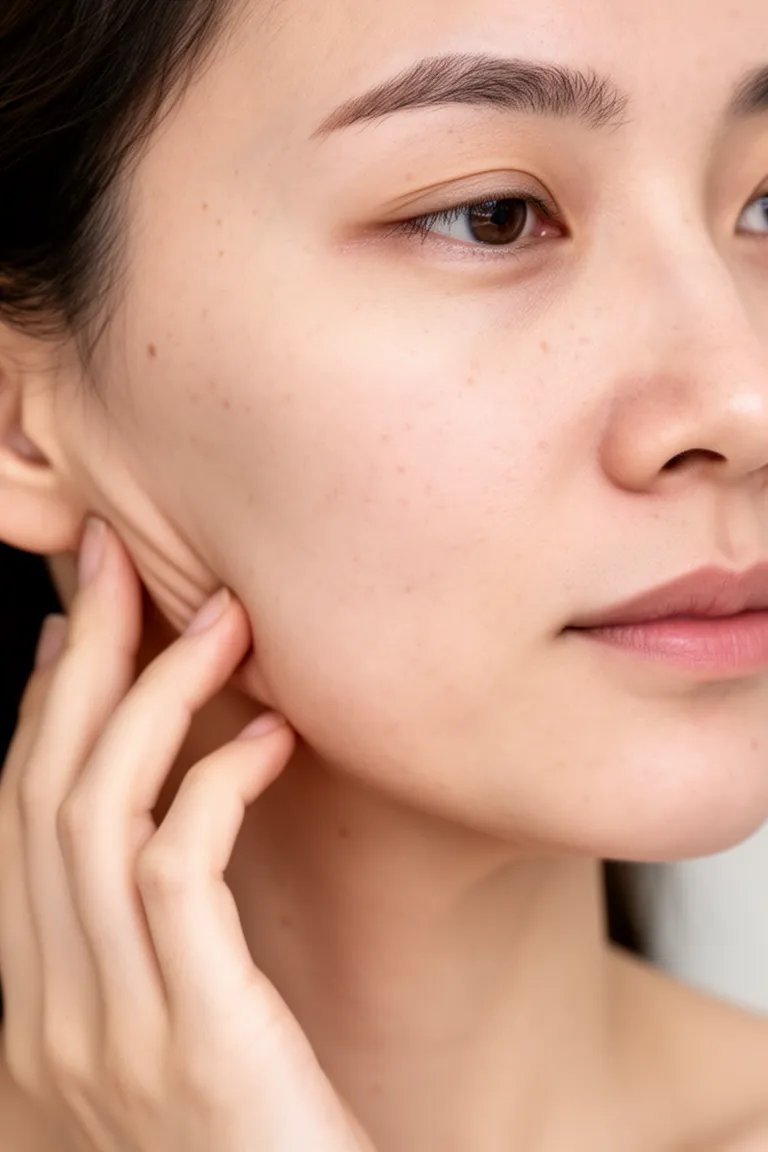
I did everything right. I sweated through spin classes, loaded my plate with greens, drank water like it was my job, and never, ever went to bed without my carefully curated skincare routine. Sunscreen was my religion. So when I caught my reflection in a store window at 47, the slight but undeniable softening along my jawline felt like a personal betrayal. I leaned closer in the bathroom mirror later, pulling the skin taut near my ears. It wasn’t wrinkles; it was a gentle, persistent droop. A quiet question started to echo in my head: Why is my jawline sagging at 47 when I’ve followed all the rules?
For weeks, I was caught in a cycle of frustration and scrutiny. I’d analyze my routine, wondering if I needed a stronger retinol, more protein, different exercises. I felt a simmering sense of unfairness. I’d invested years in a healthy lifestyle believing it was a shield against this very thing. The gap between my effort and what I saw in the mirror was profoundly confusing. It wasn’t until I let go of the blame and started digging into the why that everything shifted. I discovered that skin sagging after 40 despite a healthy lifestyle isn’t a failure of discipline—it’s biology, and understanding it was my first step toward a kinder, more realistic approach.
The Morning I Noticed My Jawline Had Changed
It was an ordinary Tuesday. I was rushing out the door, and as I turned to grab my keys, I saw my profile in the hall mirror. The light was unforgiving and direct, the kind that shows every detail. And there it was: a contour along my jaw that seemed softer, less defined than I remembered. It wasn’t dramatic, but it was new. I stopped, turning my face slowly. The skin along my neck seemed… looser. I poked and prodded, lifting it slightly with my fingers. It settled back into place, but that place was subtly lower.
The emotional impact was immediate and sharp. I’d just come from a workout. I’d eaten salmon and kale for lunch the day before. My medicine cabinet was a temple to antioxidants and SPF 50. This visible change felt like it had arrived overnight, despite all my healthy habits. I spent the day distracted, stealing glances in every reflective surface, a mix of vanity and genuine bewilderment warring inside me. Was this just how it was going to be now?
When New or Rapid Changes Deserve Medical Assessment
I realized I needed to understand if this was a normal progression or something that warranted a doctor’s visit. While a gradual softening is a typical part of aging, my dermatologist later told me that if you notice sudden, asymmetrical sagging, or if it’s accompanied by other symptoms, it’s always wise to get a professional assessment. For me, it was the slow, steady creep of time. But checking in gave me peace of mind and a starting point for a real conversation about my experience with skin sagging after 40.
Why Skin Can Sag After 40 Even When You Eat Well and Exercise
My search for answers began with a deep dive into the science, and it was honestly a relief. I wasn’t doing anything wrong; I was just human. This was the core answer to why does skin sag after 40 even if I take care of myself. The first, and biggest, player is our skin’s scaffolding: collagen and elastin.
Collagen and Elastin Decline With Age
Starting in our mid-20s, we lose about 1% of our collagen each year. After 40, that decline can accelerate. Think of collagen as the mattress springs and elastin as the elastic bands in our skin. Even with perfect nutrition, our bodies simply produce less and break down more of these critical proteins over time. No amount of kale can flip that genetic switch off completely. My healthy habits were helping my body produce the best collagen it could, but they couldn’t stop the overall decline. This is the fundamental reason I eat healthy and exercise but my skin is still sagging.
Perimenopause, Estrogen, and Skin Thickness
Then came the personal revelation about hormones. As I barreled into perimenopause, the drop in estrogen directly affects skin thickness and hydration. Estrogen helps stimulate collagen and oil production, so as it wanes, our skin can become thinner and drier, making any underlying laxity more apparent. It’s like the padding under the upholstery getting thinner, so the structure beneath shows through differently.
Facial Fat Loss, Redistribution, and Bone or Soft-Tissue Support
I also learned about facial fat loss and redistribution, which was a game-changer in my understanding. The little pads of fat that give our cheeks and jaw their plump, youthful support—think of them as strategically placed pillows—shrink and shift downward over decades. This process is completely unrelated to my body weight or fitness level. Combine that with subtle bone density changes in the jaw and cheekbones, and the relentless, silent pull of gravity, and you have a perfect storm for a softer jawline. My face wasn’t falling; its internal architecture was slowly remodeling.
Cumulative UVA and UVB Exposure
Finally, I had to confront the ghost of sunscreens past. I’ve been diligent for 20 years, but what about those teenage years of baby oil and iodine? Or the forgotten sunscreen on a cloudy day driving to work? UV rays, especially UVA, penetrate deep into the dermis and silently degrade collagen and elastin fibers. That damage accumulates like interest in a savings account we never wanted, and it shows up decades later as laxity. So, I wear sunscreen but my skin is still losing firmness because I’m dealing with decades of cumulative exposure, not just today’s sun. Understanding this multi-faceted assault helped me see my situation not as a personal failing, but as a complex, inevitable process that my healthy habits were helping to slow, not stop. Genetics set the baseline schedule, but my lifestyle was influencing the pace.
The Skincare Mistakes I Made While Trying to Fix Everything at Once
Armed with this new biological knowledge, I made a classic mistake: I attacked the problem with frantic, desperate energy. I became a consumer of every promise, and it backfired spectacularly. This phase taught me more about what not to do than any article ever could.
Why Moisturizers Improve Hydration But Cannot Lift Lax Tissue
I bought every cream promising a “lift” and “firming.” I’d slather them on, feel a temporary tightening sensation (usually from polymers that create a film), and stare in the mirror hoping to see a change. I learned the hard way that moisturizers, while fantastic for hydration and barrier health, cannot physically lift lax tissue. They plump from the outside in by drawing water into the skin, which is wonderful for smoothing fine lines and making skin look dewy, but it’s a temporary fix, not a structural change. Expecting a cream to reposition sagging skin is like expecting a topcoat of paint to fix a sagging ceiling.
How Over-Exfoliation Can Damage the Skin Barrier
In my quest for smoother, “tighter”-looking skin, I also fell into the trap of over-exfoliation. I used acids and scrubs too frequently, thinking I was sloughing off dullness to reveal firmer skin beneath. Instead, I damaged my skin barrier. My skin became red, irritated, stingy, and felt like parchment. A compromised barrier means your skin can’t hold onto moisture, it’s more vulnerable to environmental damage, and it certainly can’t respond well to beneficial actives. I was actively undermining my goal.
Why Switching Products Too Quickly Obscures Results
My bathroom counter looked like a skincare lab. I’d try a new serum for a week, see no dramatic change, and move on to the next. My dermatologist gently explained that skin cycles take about 28 days. When you switch products too quickly, you never know what’s working or what’s causing irritation. You also don’t give ingredients like retinoids or peptides the consistent, long-term use they require to stimulate real change. I was on a merry-go-round of hope and disappointment, and it was exhausting.
Retinoids, Irritation, and Gradual Introduction
Speaking of retinoids—I jumped into a high-strength retinol, using it every night because I wanted results fast. Cue the peeling, redness, and inflammation. I learned that retinoids, the gold-standard for collagen stimulation, require a slow, gentle introduction. Starting with a low concentration, using it just twice a week, and always pairing it with a good moisturizer is the way to build tolerance. Rushing the process only leads to a damaged barrier, which halts progress entirely. Patience, I discovered, is not just a virtue; it’s a requirement.
Why Sunscreen Consistency Matters More Than an Elaborate Routine
Most importantly, I realized I was focusing on the wrong hero. I’d spend 20 minutes on serums and creams and then sometimes rush my sunscreen application. My derm flipped this on its head: consistent, generous, daily application of broad-spectrum sunscreen is more impactful than any other product in your routine. It’s the daily armor. No $200 serum can outrun the damage caused by skipping SPF. This was the cornerstone I’d been treating as an afterthought.
What No One Tells You About “Anti-Aging” Products and Realistic Timelines
This period of trial and error led me to a crucial, often-missed insight that finally closed the gap between effort and expectation: the term “anti-aging” in skincare is largely a marketing myth. We’re not fighting age; we’re supporting skin health as we age. This shift in perspective was profoundly freeing.
I started looking at products not as miracle cures for why my jawline was sagging at 47, but as tools for maintenance and optimization. Their job is to improve texture, enhance hydration, protect from further damage, and gently encourage cell turnover and collagen production. They are gardeners tending to the soil—keeping it fertile and healthy—not carpenters rebuilding the house’s frame. This mindset helped me manage my expectations about timelines, which is a huge content gap in most advice.
Texture and Hydration Versus Structural Laxity
You can expect to see improvements in hydration, brightness, and fine lines within 4-8 weeks of a good routine. These are changes in the skin’s surface. Improvements in firmness and elasticity, however, are subsurface changes. They involve the slow, gradual stimulation of new collagen. From a topical retinoid, you might start to notice a subtle improvement in firmness after 3-6 months of consistent use, with more noticeable results often appearing after 6-12 months. Skincare for firmness is a marathon, not a sprint.
What Professional Treatments Can and Cannot Change
This understanding also helped me clearly separate what skincare can do from what requires professional intervention. I began to research the professional landscape not out of panic, but from a place of informed curiosity. I learned that while topicals are essential for skin health, they work within biological limits. For more significant lifting or repositioning of tissue, professional treatments that work deeper in the skin are required. Investigating the Anti-Aging Effects of Caviar Oil on Human Skin.
Navigating the World of Professional Support: A Realistic Map
After making peace with my at-home routine, I got curious. I booked a consultation with a board-certified dermatologist not for an emergency rescue, but for a map of the territory. It was enlightening and demystifying. To help make sense of the options, I found it useful to think in terms of pathways, which I’ve summarized here based on my conversations and research.
| Approach | Best For | Realistic Timeline for Visible Change | Key Consideration |
|---|---|---|---|
| Lifestyle & Consistent Skincare | Maintaining skin health, preventing further damage, improving texture and hydration. | 6-12 months for subtle firmness | The essential foundation. Maximizes skin health but cannot reposition tissue. |
| Skincare + In-Office Collagen Stimulation (e.g., Microneedling, Some Lasers) | Mild laxity, wanting to boost collagen beyond topicals with minimal downtime. | 1-3 months after a series of treatments | Requires a series, results are subtle to moderate. Focuses on improving skin quality and thickness. |
| Energy-Based Lifting Treatments (e.g., Ultrasound, Radiofrequency) | Mild to moderate sagging, seeking a non-surgical "lift" by tightening deeper layers. | 3-6 months as collagen rebuilds | Significant investment, variable results by individual. Not a substitute for surgery for significant laxity. |
| Surgical Options (e.g., Facelift) | Significant, structural laxity where the goal is repositioning of skin and underlying tissue. | Visible once healed, final results in months | Major procedure with recovery time. Addresses the root structural cause of sagging for the most dramatic change. |
She explained that treatments like certain lasers, radiofrequency, and ultrasound aim to heat the deeper layers to stimulate collagen contraction and production over time. They can offer noticeable improvement for mild to moderate laxity, but they are investments with variable results. For volume loss, fillers can restore some of that youthful scaffolding, but they don’t “lift” sagging skin; they replace lost volume, which can make skin appear tighter. how to reduce wrinkles naturally at home Hearing this laid out plainly was empowering, not discouraging. It allowed me to see professional treatments as potential tools for later, as maintenance or enhancement, not as a reflection of my failure with creams. For now, my foundation is my daily care.
Scientific Evidence
The Routine I Could Actually Maintain at 47
So, what does my life look like now? I’ve traded complexity and frantic hope for thoughtful, gentle consistency. My routine is built for reality—for early mornings, long days, and the desire to actually enjoy my life instead of obsessing over my reflection.
Morning: Gentle Cleanse, Antioxidant, Moisturize, and NON-NEGOTIABLE SPF
My morning is simple and takes five minutes. A gentle, creamy cleanser or just a splash of water. A vitamin C serum for antioxidant protection (it helps safeguard the collagen I have). A peptide-rich moisturizer. And always, always a broad-spectrum SPF 30 or higher, applied generously. This is the step I never, ever skip. It’s my daily armor.
Evening: Cleanse, Repair, and One Active at a Time
Evenings are for repair. I double cleanse to thoroughly remove sunscreen and the day’s grime—first with a balm or oil, then with a gentle face wash. I use the same moisturizer. My one active is a prescription retinoid, which I use three nights a week (built up painstakingly slowly over months). The other nights, I might use a hydrating serum with hyaluronic acid or just give my skin a rest with moisturizer only. I don’t layer multiple actives. I let one do its job.
Nutrition, Sleep, and the Other Foundations
Beyond the bottle, I’ve doubled down on the foundational habits I can control. I still eat my greens and protein for the building blocks of collagen. I prioritize sleep (as much as perimenopause allows), because that’s when skin repair happens. I maintain my exercise for circulation, which brings oxygen and nutrients to the skin. I avoid smoking and try to maintain a stable weight to avoid the stretching and contracting that can affect skin elasticity. how I tried to restore skin elasticity after 40
Adjustments for My New, More Sensitive Skin
Most importantly, I’ve learned to listen. My skin is drier and more sensitive now than it was at 35. In winter, I switch to a richer cream. If my skin stings or turns red, I scale back the retinoid and pamper my barrier. This routine isn’t about chasing my 30-year-old face. It’s about nurturing the skin I have now, making it the healthiest, most resilient, and most luminous it can be. It’s a routine built for the long haul, not a quick fix, and it finally feels sustainable.
Shifting From Frustration to Acceptance (And Empowered Action)
The biggest change wasn’t in my medicine cabinet; it was in my mindset. I moved from asking, “Why is this happening to me?” to “This is happening for me, as a human being who ages. How can I support myself through it?” I accepted that I can eat healthy and exercise but my skin will still show signs of aging, and that’s not a moral failing. It’s biology.
My healthy lifestyle wasn’t a waste—it’s the reason my skin is as good as it is, my energy is high, and my body is strong. The slight sagging along my jaw isn’t a sign I failed; it’s a sign I’ve lived, laughed, turned my face to the sun, and experienced 47 years of a full life.
Letting go of the perfect, taut jawline of my youth allowed me to appreciate the face I have now—one that shows my experience, my resilience, and my care. My goal is no longer the prevention of the inevitable, but the graceful, informed navigation through it. I support my skin with science-backed care, protect it fiercely from the sun, and nourish my whole body. The reflection I see now is familiar, strong, cared for, and authentically mine. And that, after all the confusion, feels like the truest victory.
Frequently Asked Questions
Q: I wear sunscreen every day now, but I didn't in my 20s. Is it too late to start? A: It is absolutely never too late. Think of past sun damage as a debt you can’t erase, but current and future sun exposure as new debt you can stop accruing immediately. Starting and maintaining consistent, broad-spectrum sunscreen use is the single most powerful action you can take to slow down further collagen breakdown and prevent additional sagging and wrinkles. You’re hitting the pause button on new damage, and that’s hugely significant.
Q: Can any cream or serum actually "lift" sagging skin? A: This was my biggest misconception. Topical products cannot physically lift skin in the way a surgical or energy-based procedure can. However, ingredients like retinoids, peptides, and certain growth factors can stimulate collagen production and improve skin elasticity over many months of consistent use. This can lead to a firmer, more toned appearance and improved skin resilience. They improve the quality of the skin you have but don’t reposition it.
Q: How long does it really take to see results from a new skincare routine aimed at firmness? A: You must be patient, which is hard when you’re frustrated. For hydration and brightness, you might see changes in a few weeks. For genuine improvements in firmness and elasticity from actives like retinoids, it typically takes a minimum of 3-6 months of unwavering consistency. More noticeable results often appear after 6-12 months. If a product promises “instant lifting,” it’s almost certainly a temporary film effect, not a structural change.
Q: I'm overwhelmed by all the professional treatment options. Where should I start? A: Start with a consultation with a board-certified dermatologist. Go in as an informed consumer, not a desperate one. Write down your specific concerns (e.g., “softening along my jawline”) and your budget. Ask about the expected outcomes, required number of sessions, downtime, and risks for options suitable for your skin type and degree of laxity. A good, ethical provider will educate you and help you set realistic expectations, not pressure you into a sale. dermatologist recommended anti wrinkle cream
Q: Are there specific ingredients I should look for in products to support skin firmness? A: Yes, focus on proven, well-researched ingredients. Retinoids (retinol, prescription tretinoin) are the gold standard for collagen stimulation. Peptides are great for signaling skin repair. Vitamin C is a powerful antioxidant that protects existing collagen and helps with brightness and firmness. Niacinamide strengthens the skin barrier and can improve elasticity. My advice? Pick one active (like a retinoid), introduce it slowly, and master consistency before adding anything else.
Q: Does collagen decline cause skin sagging after 40, and should I take supplements? A: Collagen decline is a primary cause of skin sagging after 40, alongside elastin loss and volume changes. The evidence on oral collagen supplements is still emerging but promising. Some studies show they can improve skin hydration and elasticity. If you consider them, look for hydrolyzed collagen peptides and manage your expectations—they’re a supportive player, not a magic bullet. The best approach is to combine potential internal support (like a supplement, if you choose) with the proven external strategies of sunscreen, retinoids, and healthy lifestyle habits.
📌 Love this guide? Save it on Pinterest!
Pin Skin Sagging After 40? Why It Happens & What Helps in 2026 to your board so you can come back to it later.

