
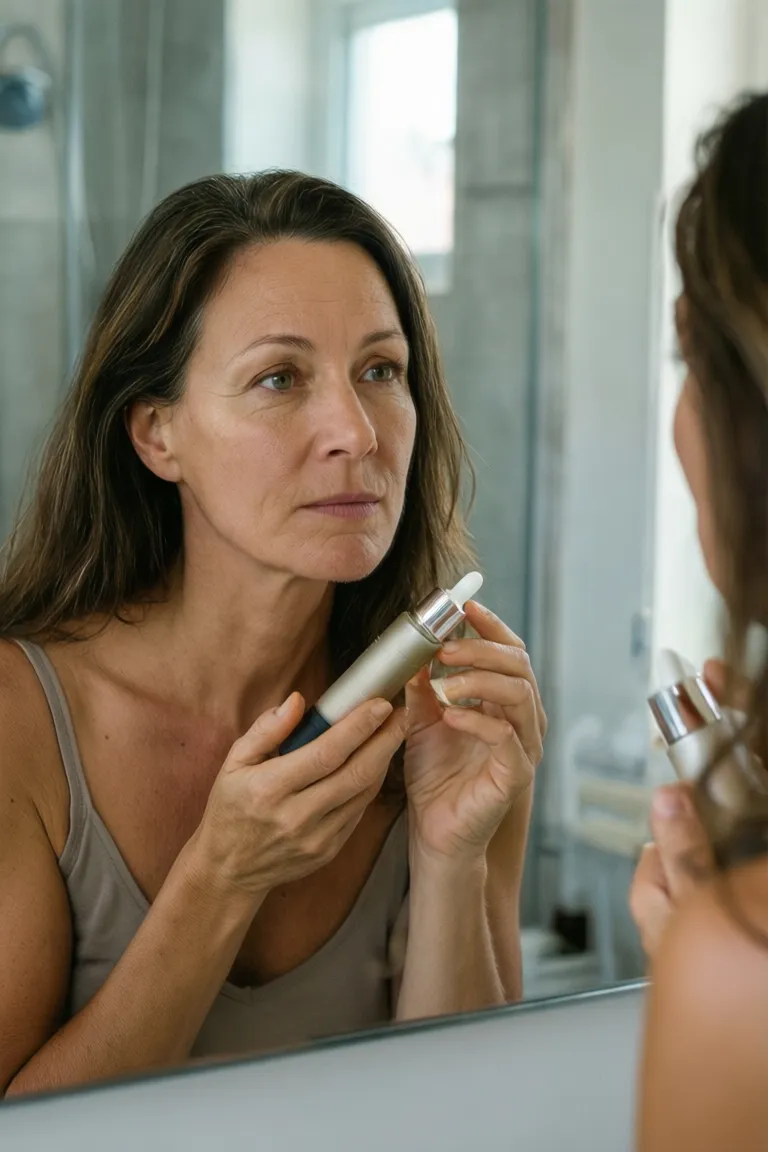
I stared at my bathroom mirror, the unforgiving morning light tracing every faint line and new shadow on my face. At 48, I’ve made my peace with the natural process of aging, but I haven’t surrendered to it. My skincare journey isn’t about chasing a 25-year-old’s reflection; it’s about honoring the skin I’m in and giving it the best possible care. I’ve invested years and a small fortune in serums, creams, and treatments, all promising to be the one. When I finally decided to try Skinception, after months of reading heartfelt testimonials from women whose stories mirrored my own, I thought the hard part was over. The research was done, the decision was made. I was wrong.
The real dilemma began the moment I opened my laptop to buy it. Two browser tabs stared back at me: one for the official Skinception website, glowing with professional photos and promises, and another for Amazon, with its familiar “Buy Now” button and a price that was slightly lower. My cursor hovered, paralyzed by a fear that felt deeply personal. This wasn’t my first rodeo. After being burned by a counterfeit “luxury” serum from a third-party seller last year—a product that left my skin red, irritated, and my confidence shaken—I wasn’t just buying skincare. I was making an investment in my well-being. The thought of gambling that investment on a fake, an expired batch, or simply overpaying for a compromised product made my stomach knot. This was more than a transaction; it was a test of trust in a digital marketplace that often feels like the wild west. I needed to know, from someone who’d been in my exact shoes, which route was truly safe and offered real value.
My Initial Hesitation: Why I Didn't Just Click 'Add to Cart' on Amazon
My finger was literally hovering over the mouse. The Amazon listing for Skinception was right there, priced a few dollars less than the official site, and with Prime shipping, it would be at my door in two days. The convenience was screaming at me. But my hand felt frozen. A visceral memory flashed: the sleek, but slightly off bottle of that other serum I’d bought. The packaging had a typo on the back, the seal was just a piece of clear tape, and the consistency was watery, not silky. The whole experience left me feeling violated and, frankly, foolish for thinking I’d found a “deal.” That single incident taught me a brutal lesson: when it comes to something I apply to my face daily, especially a premium product with active ingredients targeting specific concerns like fine lines and elasticity, convenience is a distant second to authenticity. My specific fears crystallized into a trio of nightmares I couldn’t shake.
First was the specter of a counterfeit. What was actually in that bottle? Were the ingredients safe? Was the concentration even correct? Second was the worry of receiving an old, oxidized batch sitting in some non-climate-controlled warehouse for years, rendering it ineffective before I even opened it. And third, perhaps the most daunting, was the terrifying prospect of having no real customer support if something went wrong. Who would I even complain to—a faceless third-party seller with a name like “HealthBeauty_World2023”? The return policy would be a maze of fine print, if one existed at all. Scrolling down the Amazon page, the sheer number of sellers listed under the same product name was overwhelming and instantly suspicious. I realized that for me, buying Skinception on Amazon wasn’t a simple transaction; it felt like navigating a minefield blindfolded, where the potential savings of ten or fifteen dollars weren’t worth the psychological cost of weeks of uncertainty and doubt.
Past negative experiences with online skincare purchases My skepticism didn’t come out of nowhere; it was earned, scar by scar. Beyond the counterfeit serum, I’d once received a “new” jar of a popular moisturizer from a major online retailer that was clearly half-empty and had a strange, rancid smell. The return process was a multi-week headache of emails, photos, and phone calls that left me exhausted. These weren’t just minor inconveniences; they were trust-eroding events. For a product like Skinception, which isn’t available at my local department store, the online purchase is the only gateway. I knew that if I was going to spend my money—and my hope—on what promised to be a high-quality, scientifically-formulated product, I needed more than a low price. I needed proof of legitimacy. I needed to know exactly where it came from, who stood behind it, and that it hadn’t been tampered with. The fear of getting a fake wasn’t just about wasting money; it was about the lost time in my skincare routine, the potential for a bad skin reaction that would set me back months, and the profound disappointment of yet another failed hope in my quest for effective skincare. This level of premium skincare demands extra caution, and my past experiences were the red flags I simply could not ignore.
Deep Dive into the Official Skinception Store: What I Found (and What I Almost Missed)
So, I took a deep breath and closed the Amazon tab. I committed to exploring the official Skinception site with the same scrutiny I’d give a rental contract. My first impression was one of immediate clarity. There was one source, one brand, one cohesive message. It felt controlled, professional, and intentional. The biggest, most glaring benefit was the screaming guarantee of authenticity. This was the source. If the formula was engineered in a specific way, with particular pH levels and ingredient stability in mind, this was where it would be pristine, fresh from the manufacturer, and exactly as the scientists intended. I started poking around, my guard still up, looking for the catch. The price was listed at full MSRP, which initially gave me pause compared to the lower numbers floating on Amazon. But then I slowed down and started to notice details I would have completely missed if I’d been in a rush to just get the “shopping” over with.
They offered a multi-bottle bundle that brought the per-unit cost down significantly—a common practice for brands to encourage commitment, but a genuine value if you’re planning to use the product consistently for 90 days, which is what most skincare regimens require to show results. More importantly, I found a section clearly titled “Support” or “Contact Us,” outlining their return policy and customer service contact information. There was a physical address and a promise of direct support. This wasn’t an anonymous marketplace; it was a company with a reputation to uphold directly to me, the consumer. The sense of accountability was palpable.
Understanding the official return policy and customer service channels I made a point to read the fine print, something I’m usually guilty of skimming. The official store offered a satisfaction guarantee, which, while having its own terms (like a 30 or 60-day window), provided a tangible layer of security. It meant they believed in their product enough to stand behind it. I also instinctively looked for security badges during the checkout simulation—the little SSL certificates and trusted payment gateway logos. For a purchase involving my credit card and personal data, this mattered almost as much as the product itself. Then, I almost missed it: a small, subtle banner at the very top of the site, offering a 10% discount for first-time buyers if you simply signed up for their newsletter. It wasn’t plastered on the main product page as a hard sell. This was a key insight: the Skinception official website often has these exclusive, direct-from-manufacturer promotions that aren’t reflected on third-party sites. The value proposition wasn’t just in the bottle; it was in the entire bundled safety net of guaranteed freshness, direct customer support, and sometimes, hidden deals that could completely change the financial math.
Navigating Amazon: The Red Flags and Reassurances I Encountered for Skinception
Despite my growing lean toward the official site, my curiosity—and my frugal side—got the better of me. I went back to Amazon, but this time I put on my detective hat. I was a researcher, not a prospective buyer. I wanted to understand exactly what the alternative entailed, to see if my fears were justified or if I was being overly cautious. The first thing I did was look past the shiny “Add to Cart” button and scroll directly to the “Other Sellers on Amazon” link. It was a mosaic of options: some “Fulfilled by Amazon,” others shipped directly from third-parties with names ranging from legitimate-sounding wellness distributors to vague storefronts like “Beauty_Deals_4U.”
I clicked on a few seller profiles. One had a 95% positive rating over the past 12 months. That sounds decent, right? But then I did the mental math: if that seller had 1,000 transactions, that’s 50 potentially unhappy customers complaining about fakes, expired products, or terrible service. I then dove into the product reviews, but with a specific mission. I wasn’t looking for reviews about efficacy; I was hunting for authenticity clues. I used the search function within the reviews and typed keywords: “fake,” “authentic,” “seal broken,” “expired,” “different packaging.” And there they were, buried pages deep: the red flags. A handful of reviews where customers posted photos showing bottles with smudged labels, missing batch codes, or caps that didn’t match the official imagery.
Analyzing customer reviews for authenticity clues The most valuable review was a detailed one with a side-by-side photo comparison. A customer had bought a bottle from Amazon and another directly from Skinception. They pointed out a slight font weight difference on the serial number and a less crisp logo on the Amazon bottle. This was real-world, crowd-sourced authenticity check Skinception Amazon research happening right in the comment section. I also learned the critical importance of the “Ships from” and “Sold by” lines. “Ships from Amazon” means it’s sitting in an Amazon warehouse, which offers speed and maybe a bit more logistical oversight, but it doesn’t guarantee the seller who supplied that inventory to Amazon was legitimate. The Amazon A-to-z Guarantee was mentioned in some comments as a last resort, but reading its terms revealed it’s a process, not a simple return—you have to attempt to resolve it with the seller first, and it only covers certain scenarios. The potential for faster shipping was undeniable, but the reassurance felt fragile, built on a foundation of extremely careful seller vetting and a healthy dose of crossed fingers.
The Crucial Comparison: Mapping Your Options for Buying Premium Skincare
After living in both worlds—the pristine official site and the bustling Amazon marketplace—I needed a way to organize my thoughts. It wasn't just about Skinception anymore; it was about understanding the landscape for any premium skincare purchase. I sat down and sketched out what I’d learned, which eventually turned into this simple table. It compares the general approaches you can take, based on what you prioritize most. This framework helped me see my own decision more clearly.
| Purchasing Approach | Best For Shoppers Who... | Realistic Timeline for Results | The Key Consideration |
|---|---|---|---|
| Buying from the Official Brand Site | Prioritize guaranteed authenticity, direct support, and are willing to research for hidden deals/bundles. | Immediate peace of mind; product results follow the brand's suggested 8-12 week cycle. | You're paying for the entire ecosystem—freshness, warranty, and brand accountability—not just the serum. |
| Buying from a Vetted, High-Rated Amazon Seller | Value ultimate convenience and potential cost savings, and are willing to invest time in meticulous seller/review analysis. | Fast shipping, but potential delays if you need to return or verify authenticity, slowing the start of your regimen. | Your safety net is your own diligence. You must become an expert on that specific seller's reputation. |
| Buying from Unvetted Third-Party Sellers (on any platform) | Are driven solely by the lowest possible price, often in a hurry. | Highly unpredictable. Risk of receiving nothing, a fake, or an expired product wastes weeks or months. | This is the highest-risk option. The "savings" are often illusory when weighed against the total cost of hassle and disappointment. |
| Waiting for an Official Site Sale or Promo | Want the security of the official source but have the patience to wait for the best possible value. | Requires patience upfront, but leads to the most confident and potentially cost-effective start. | This strategy blends the best of both worlds but demands you not act on impulse. Signing up for newsletters is key. |
Seeing it laid out like this made my own priorities snap into focus. I was not a "lowest possible price, at any cost" shopper for something this important. My past experiences had firmly placed me in the first category, with a strong appreciation for the fourth.
The Price vs. Peace of Mind Dilemma: My Final Decision and Why It Mattered
Armed with my research and my new framework, I sat down for the final reckoning. It was the classic price vs. peace of mind dilemma in high definition. On a pure, cold spreadsheet, the Amazon option from the most reputable-looking seller was about $15 cheaper per single bottle, before any tax differences. The official site, at full price, was the clear loser on cost. But then I applied the discounts I’d found: the newsletter sign-up code and the three-bottle bundle deal. Suddenly, the per-bottle cost from the official site was within a few dollars of the Amazon price, and I was getting a full 90-day supply, which is how you’re supposed to evaluate a skincare product anyway. how long before you see results from an intensive eye cream for deep wrinkles often requires this kind of commitment.
But the spreadsheet didn’t have a column for “anxiety.” It didn’t quantify the hours I might spend after purchase worrying, meticulously inspecting the package for signs of tampering, or—most importantly—doubting the product itself if my results were slow to appear. Was it the formula? Or was it a fake? For me, the psychological cost of that uncertainty was immense. It would poison the entire experience. What tipped the scale decisively was the intangible value of the warranty and the direct line of support. If I had a question about how to layer it with my moisturizer, or if my skin felt unusually dry during the adjustment period, I wanted to speak to someone who represented the brand, not a marketplace intermediary who might just send me a generic FAQ link.
Weighing the value of warranty and direct customer support The decision became clear as day. I purchased a 3-bottle bundle directly from the Skinception official store, using the first-time buyer discount. The moment I received the order confirmation email, which featured the official brand name in the sender details and a clean, professional invoice, a wave of relief washed over me. It was an emotional payoff I hadn’t even known I was seeking. When the package arrived a few days later, it was impeccably packaged in branded materials, with shrink-wrap seals intact and a clear, laser-printed batch code on each box. That code alone felt worth the price difference; it was a direct line back to the manufacturer’s quality control. This decision mattered because it transformed the experience from a transactional gamble into a confident, intentional step in my skincare journey. The few extra dollars, which ultimately weren’t even that much extra, weren’t an overpayment; they were an investment in trust. And for a 48-year-old woman trying to care for her skin with intention, that trust is priceless. how to get rid of fine lines around eyes naturally without botox can be a similar journey of finding trusted sources.
Scientific Evidence
What Happened After I Finally Clicked "Buy"
This is the part most reviews leave out: the aftermath of the decision. Receiving that official package was just the beginning. I started using the serum that night, and there was a distinct difference in the experience simply because I had zero doubt about what was in the bottle. The texture was exactly as described—silky, not sticky. The scent was subtle and clean, not perfumey or chemical. This might sound obvious, but when you’ve been burned before, these small confirmations are huge. I settled into my routine, applying it morning and night as directed. I didn’t expect a miracle in a week, and I didn’t get one. But around the 4-week mark, I noticed my foundation was applying more smoothly. By 6 weeks, the fine lines around my eyes, the ones I see when I smile, seemed just a touch softer in the mirror. The results were gradual, but because I trusted the product was authentic, I could confidently attribute any changes to the formula itself, not to luck or placebo effect from a “good deal.” This peace of mind allowed me to be patient and consistent, which is 90% of the skincare battle. Dupilumab treatment improves signs, symptoms, quality of life, and work productivity in patients with atopic hand and foot dermatitis: Results from a phase 3, randomized, double-blind, placebo-controlled trial highlights how consistent treatment can lead to significant improvements, a principle that applies to daily skincare too.
My Takeaway: How to Confidently Buy Skinception (or Any Skincare) Online Without Regrets
This entire, anxiety-ridden journey taught me more than where to buy one product; it gave me a durable, transferable framework for any future premium skincare purchase. My path from confusion to confidence can be distilled into a personal checklist I now follow religiously.
First, I will always start my research at the official brand website. Not to buy immediately, but to establish the baseline: the correct packaging imagery, the MSRP, the official policies, and any direct promotions. This is my non-negotiable source of truth. It’s how I know what the “real thing” looks like.
Second, if I consider a third-party platform like Amazon, I will vet the seller as if I’m hiring them for a critical job. I’ll look beyond the star rating to their lifetime feedback percentage (I now have a hard rule of nothing below 98% for skincare), read the 1- and 2-star reviews specifically to see patterns of complaints, and I will always, always search for “authentic” and “fake” within the product reviews.
Third, I will always compare the total value, not just the sticker price. Does the official site offer a loyalty program, a bundle discount that makes sense for my needs, or free shipping that changes the math? Does it include samples or other value-adds that enhance the experience? The cheapest upfront cost is often the most expensive in terms of risk and hassle.
Fourth, I prioritize retailers (official or otherwise) that offer a clear, accessible return policy and visible customer service contact. If I can’t find how to get help easily, I walk away.
Finally, I’ve learned to trust my gut more than any algorithm. If a deal seems too good to be true, it almost always is. If the seller information is vague or feels sketchy, I close the tab. The ultimate goal isn’t just to get a product delivered; it’s to get the authentic product, in its intended form, so you can fairly judge its effects on your skin. That’s the only way to know if something truly works for you. This process is how you buy Skinception or any skincare online without regrets, transforming consumer anxiety into empowered, confident decision-making. does hydration really help get rid of fine lines around eyes or am I wasting money is a question that requires this same level of informed decision-making.
Frequently Asked Questions
Q: Honestly, is buying Skinception on Amazon safe, or are the fakes a real problem? A: Based on my deep dive, it's a spectrum of safety. Yes, there are legitimate sellers on Amazon. However, the risk of counterfeit, expired, or tampered-with products is undeniably present due to the commingling of inventory from different sellers. Your safety isn't automatic; it's directly proportional to your effort in vetting the specific seller. You must look for sellers with near-perfect ratings (98-100% positive) over a long history and a high volume of sales. Even then, choosing an option that is "Ships from and Sold by Amazon.com" offers a slightly more streamlined return process. But if you want to eliminate the vetting process entirely and have a guarantee from the source, the official store is the unequivocally safest route.
Q: I keep hearing about "hidden deals" on the official site. What should I actually look for? A: Great question, because they don't make it obvious! The most common ones I've seen are: 1) A small banner or pop-up offering a percentage off your first order in exchange for your email address (check the top or bottom corners of the site). 2) Multi-bottle bundles (like "Buy 2, Get 1 Free" or a discounted 3-pack) that are often only on the official site. 3) Seasonal sales around major holidays. 4) A subscription option that delivers at a regular interval, which usually comes with a discount and free shipping. My advice? Never checkout on the official site without scrolling the entire page, checking your cart for any automatic promo applications, and signing up for that newsletter first.
Q: How can I really tell if the Skinception I received, especially from Amazon, is the real deal? A: Become a detective. Use the official website as your reference guide. Compare your bottle meticulously: check the font, spacing, and color saturation on the label. Are there any spelling errors? Is the batch code printed clearly and legibly, or is it smudged? Is there an intact, factory-applied seal (like shrink-wrap around the cap or box)? Then, use your senses. Does the serum's color and smell match the description (usually clear/translucent and lightly scented or unscented)? Is the texture consistent and smooth? Fakes often fail in multiple small details. If more than one thing seems "off," trust your instinct.
Q: What's the one biggest mistake you see people making when buying skincare like this online? A: The single biggest mistake is prioritizing speed and a low price over seller legitimacy. Clicking the "Buy Now" button on the first listing you see, especially if it's the "Amazon's Choice" badge (which is based on sales velocity, not authenticity checks), is the highest-risk move. The second biggest mistake is not understanding the return policy for the exact seller you're buying from. A third-party seller's policy might be brutally strict ("all sales final"), while the official brand might offer a satisfaction guarantee. You must know what you're agreeing to before you enter your credit card number.
Q: For someone truly on a budget, is it ever worth risking Amazon to save money? A: This is the hardest, most personal question. If the budget is the absolute primary constraint, and you must try the product, then your job is to minimize risk, not eliminate it. This means dedicating significant time to find the single most reputable seller with a long, flawless track record specifically for selling Skinception. Read every negative review. Look for seller transparency. And, crucially, factor in that you might lose money entirely if you get a fake and can't recover the funds. Sometimes, waiting an extra month to save up for the official product—especially with a first-time discount—is actually the more financially sound and less stressful path in the long run.
📌 Love this guide? Save it on Pinterest!
Pin Skinception: Official Store vs. Amazon 2026 – My Honest Buying Experience to your board so you can come back to it later.

